Overview
An occupational health and safety management system that exists only to satisfy audit requirements isn't a system — it's a paperwork exercise. IRA's ISO 45001 health and safety management solutions help organizations build a genuine, performance-driven safety framework that drives continuous improvement, reduces workplace risk, and creates lasting cultural change — not just certification-ready documentation.
As experienced ISO 45001 consultants, we've worked with manufacturing, industrial, and corporate organizations across India to design, implement, and sustain OHSMS frameworks that actually reduce incident rates and improve safety culture — not just pass external audits.
Why ISO 45001 Matters
Occupational health and safety isn't just a regulatory obligation — it's a fundamental responsibility to your workforce. Yet many organizations treat safety management as a box-ticking exercise, producing policies and procedures that look complete on paper but fail to translate into genuine, day-to-day behavioral change on the shop floor.
ISO 45001 changes this by shifting the focus from reactive hazard control to proactive risk management. It's not about documenting what you're already doing — it's about systematically identifying what could go wrong, building controls that actually work, and continuously improving your safety performance based on real data. Organizations that embrace the spirit of the standard — not just its paperwork requirements — consistently report lower incident rates, improved employee morale, and stronger client confidence.
The ISO 45001 Standard — What It Actually Means
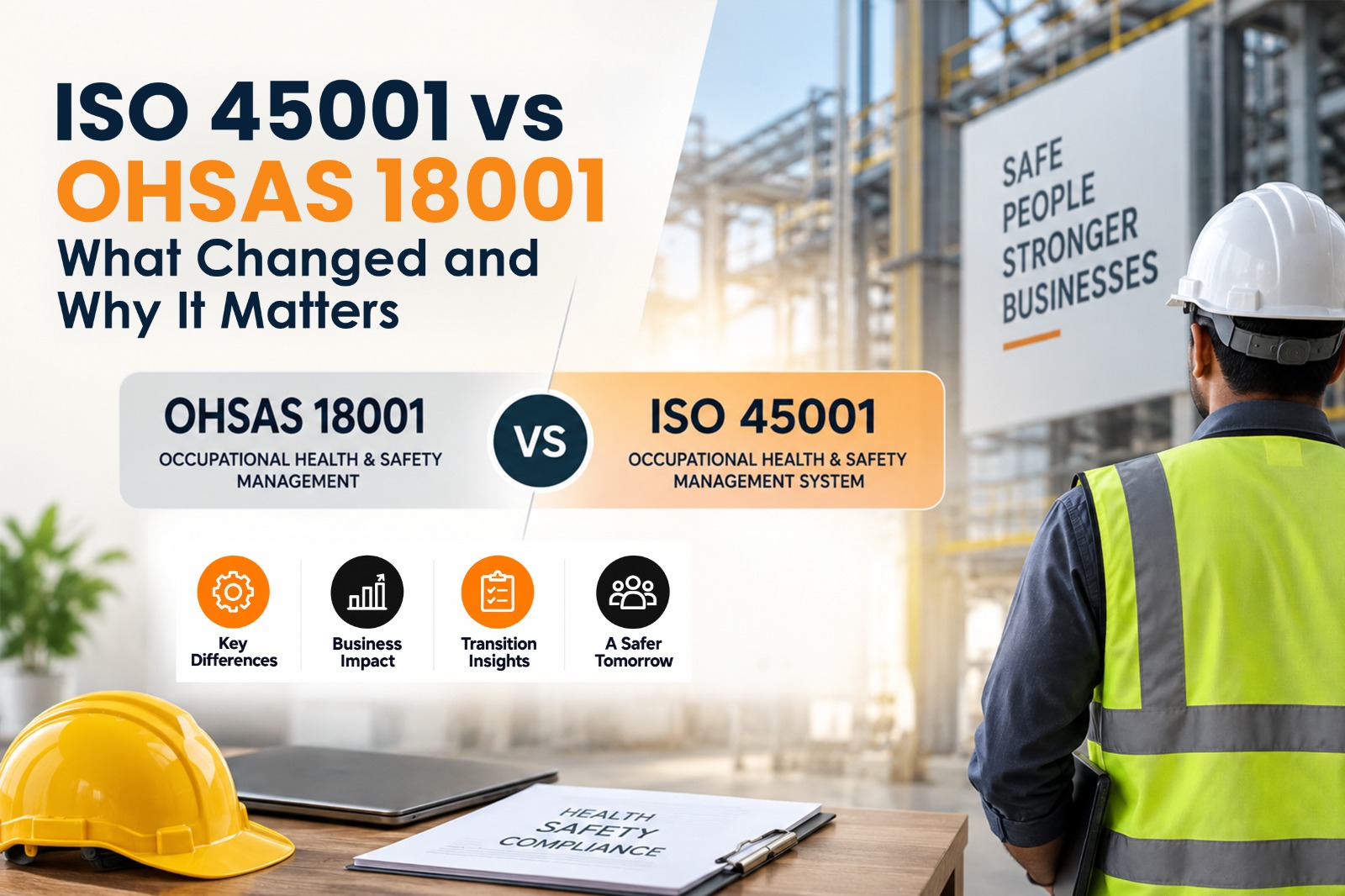
Published in 2018, ISO 45001 is the first truly global standard for occupational health and safety management systems. It replaced the older OHSAS 18001 standard, introducing a more strategic, forward-looking approach to safety. The standard follows the high-level structure common to all modern ISO management system standards (the Annex SL framework), which means it integrates cleanly with existing ISO 9001 (Quality) and ISO 14001 (Environmental) systems.
At its core, ISO 45001 requires organizations to:
Understand the context
Internal and external factors affecting safety performance
Identify interested parties
Workers, contractors, regulators, clients and their expectations
Assess risks & opportunities
Prioritize occupational health and safety risks
Establish safety objectives
Clear action plans with measurable targets
Operationalize controls
Clear roles, responsibilities, and competencies
Monitor & evaluate
Continuously measure safety performance
Internal audits & reviews
Drive improvement through management review
Continual improvement
Systematic enhancement of safety performance
What Our Service Covers
Our ISO 45001 service is structured to support organizations at every stage of the journey — whether you're starting from scratch, transitioning from OHSAS 18001, or looking to strengthen an existing system:
- 01Gap assessment against ISO 45001 requirements
- 02OHSMS design and practical documentation
- 03Risk and opportunity management implementation
- 04Operational control embedding into daily processes
- 05Competence and training support
- 06Internal audit program development
- 07Management review facilitation
- 08Pre-certification and post-certification sustainment
Who Should Use This Service
- Plant and operations managers
- EHS heads and safety teams
- Quality and compliance managers
- HR teams responsible for occupational health
- Organizations pursuing ISO 45001 certification
- Organizations transitioning from OHSAS 18001
Benefits of IRA's Service
- Genuine safety performance improvement, not just certification paperwork
- Practical, implementable OHSMS design
- Risk-driven approach prioritizing what actually matters
- Integration with existing ISO 9001 / 14001 systems
- Experienced consultants with industrial safety backgrounds
- Supports tender, due diligence, and insurance requirements
Common Challenges We Help Organizations Overcome
- Documentation that's impractical
- Risk registers that go nowhere
- Audits that check boxes
- Systems that fade post-certification
Organizations attempting ISO 45001 implementation on their own often run into predictable obstacles: documentation that's comprehensive but operationally impractical, risk assessments that identify hazards but don't translate into meaningful controls, or internal audits that check boxes without surfacing genuine improvement opportunities. As experienced ISO 45001 consultants, we help clients anticipate and design around these failure points from the outset.
A common early mistake is treating implementation as a documentation project rather than a genuine operational change initiative. Organizations sometimes focus heavily on producing the required procedures and records while neglecting the deeper work of building leadership commitment, worker participation, and practical risk ownership. Our approach prioritizes these human and behavioral elements — because a management system that exists only in binders isn't a system at all.
Measuring the Impact of ISO 45001 Implementation
One of the genuine advantages of a properly implemented ISO 45001 system is that it generates genuinely useful performance data — incident trends, near-miss patterns, audit findings, and risk treatment effectiveness. We help organizations set up simple, practical monitoring and measurement systems that turn raw safety data into actionable insight — without requiring expensive software or overly complex reporting structures.
Over time, this data becomes a powerful tool not just for safety management, but for demonstrating tangible safety improvement to leadership, auditors, and clients conducting safety due diligence — reinforcing the business case for continued investment in occupational health and safety.
Getting Started the Right Way
Organizations new to ISO 45001 often ask where to begin. We typically recommend starting with a focused gap assessment and roadmap — establishing a clear, phased plan that prioritizes the highest-risk areas first, builds internal competency progressively, and sequences implementation in a way that builds sustainable momentum rather than early fatigue.
IRA supports this phased approach, helping you move from gap identification to certification readiness with practical, manageable steps.
Frequently Asked Questions
What's the difference between OHSAS 18001 and ISO 45001?
ISO 45001 is the newer, globally recognized standard that replaced OHSAS 18001 in 2018. It takes a more strategic, risk-based approach — focusing on leadership engagement, worker participation, and continuous improvement rather than just procedural compliance.
How long does ISO 45001 implementation take?
Timelines vary based on organization size and complexity, but typical implementation projects range from 6 to 18 months. IRA can help you develop a realistic, phased roadmap.
Do you offer certification services?
No — IRA provides implementation and readiness support, but certification itself is issued by accredited external certification bodies. We work alongside your chosen certification partner to ensure you're fully prepared.
Do you help with integrating ISO 45001 with other management systems?
Yes — ISO 45001 shares the Annex SL high-level structure with ISO 9001 and ISO 14001, making integration straightforward. We regularly help clients combine multiple standards into a unified, efficient management system.
Get Started
A genuine occupational health and safety management system isn't built through documentation alone — it's built through leadership commitment, worker participation, and continuous improvement. Partner with IRA to build an ISO 45001 framework that actually protects your people and strengthens your organization.
Enquire About ISO 45001 Consultancy