Overview
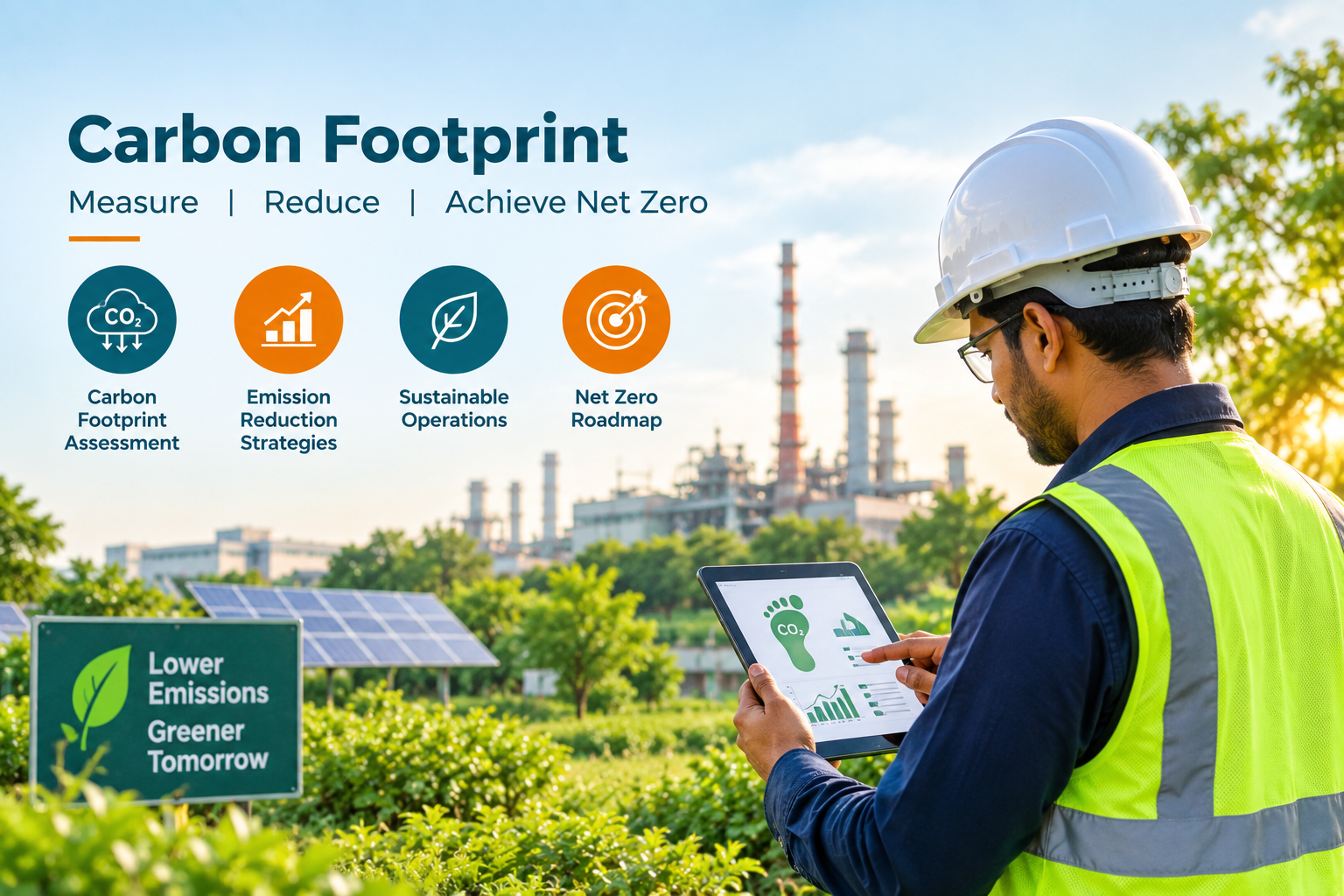
A sustainability commitment that exists only in a press release isn't environmental responsibility — it's greenwashing. IRA's carbon footprint assessment and management services help organizations move beyond vague sustainability pledges toward genuine, measurable emissions reduction. We help you measure your carbon footprint accurately, identify reduction opportunities, and build a credible path to net zero — not just produce a report that sits on a shelf.
As experienced carbon footprint consultants, we've worked with manufacturing, industrial, and corporate organizations across India to quantify their greenhouse gas emissions, develop reduction strategies, and demonstrate genuine environmental commitment to stakeholders, investors, and regulators.
Why Carbon Footprint Management Matters
Climate change isn't a distant threat — it's a present reality with direct implications for business resilience, regulatory compliance, and stakeholder trust. Organizations that fail to measure and manage their carbon footprint face increasing risks: regulatory penalties, investor pressure, supply chain exclusion, and reputational damage.
Yet many organizations treat carbon management as a reporting exercise rather than a strategic imperative. They calculate emissions, file reports, and make generic sustainability claims — but fail to identify meaningful reduction opportunities, engage suppliers, or build a credible transition plan. Our approach changes this by helping organizations treat carbon footprint assessment as a diagnostic tool — revealing where emissions actually come from, what can be reduced practically, and how to build a credible, data-backed sustainability story.
Understanding the Carbon Footprint
A carbon footprint is the total amount of greenhouse gas emissions — primarily carbon dioxide (CO2), methane (CH4), and nitrous oxide (N2O) — that are generated by an organization's activities. These emissions are typically classified into three scopes under the internationally recognized Greenhouse Gas (GHG) Protocol:
Scope 1 — Direct
Fuel combustion in boilers, company-owned vehicles, on-site manufacturing processes
Scope 2 — Purchased energy
Electricity, steam, heating, and cooling consumed by your organization
Scope 3 — Value chain
Purchased goods, business travel, commuting, transport, waste, product use
Often the largest share
Scope 3 typically represents the majority of total emissions for most organizations
What Our Service Covers
Our carbon footprint service is structured to support organizations at every stage — whether you're measuring emissions for the first time, developing a reduction strategy, or working toward carbon neutrality:
- 01Carbon footprint assessment across Scope 1, 2, and 3 emissions
- 02Data collection and quality assurance
- 03Emissions baseline establishment
- 04Reduction opportunity identification
- 05Carbon reduction strategy development
- 06Offsetting and carbon credit guidance
- 07Net zero pathway planning
- 08Sustainability reporting and stakeholder communication
Who Should Use This Service
- Sustainability and ESG managers
- EHS and compliance teams
- Facility and operations managers
- Senior leadership & board members responsible for climate strategy
- Organizations responding to client, investor, or regulatory disclosure requirements
- Organizations working toward carbon neutrality or net zero
Benefits of IRA's Service
- Accurate, credible emissions measurement using recognized methodologies
- Practical, prioritized reduction recommendations
- Experienced consultants with industrial and sustainability backgrounds
- Supports ESG reporting, investor due diligence, and regulatory compliance
- Science-aligned net zero pathway planning
- Enhanced brand reputation and stakeholder trust
Common Challenges We Help Organizations Overcome
- Scattered data across departments
- Uncertain emission factors
- Overwhelming Scope 3
- Impractical reduction plans
Organizations attempting carbon footprint assessment on their own often run into predictable obstacles: data that's scattered across departments and difficult to collect, uncertainty about which emission factors to apply, Scope 3 emissions that seem overwhelming to quantify, or reduction strategies that look good on paper but are operationally impractical.
A common early mistake is treating carbon assessment as a one-off reporting exercise rather than an ongoing management tool. Organizations sometimes invest significant effort in calculating emissions for a single reporting cycle, then fail to maintain data systems or track progress year over year. Our approach builds sustainable data collection and monitoring systems from the start — ensuring that carbon management becomes an ongoing business practice, not a one-time project.
Measuring the Impact of Carbon Reduction Initiatives
One of the genuine advantages of a properly implemented carbon footprint management program is that it generates meaningful data — emissions trends, reduction progress, and the effectiveness of specific interventions over time. We help organizations set up simple, practical monitoring and reporting systems that turn carbon data into actionable insight — without requiring expensive software or overly complex reporting structures.
Over time, this data becomes a powerful tool not just for sustainability reporting, but for demonstrating genuine environmental commitment to clients, investors, and regulators — reinforcing the business case for continued investment in carbon reduction initiatives.
Getting Started the Right Way
Organizations new to carbon footprint assessment often ask where to begin. We typically recommend starting with a focused scoping assessment — understanding your emissions sources, data availability, and organizational priorities — followed by a phased assessment that prioritizes the most material emissions categories first.
IRA supports this phased approach, helping you move from initial measurement to credible reduction strategy with practical, manageable steps.
Frequently Asked Questions
What is the difference between Scope 1, 2, and 3 emissions?
Scope 1 covers direct emissions from sources your organization owns or controls. Scope 2 covers indirect emissions from purchased energy. Scope 3 covers all other indirect emissions in your value chain — both upstream and downstream. Most organizations find that Scope 3 represents the largest share of their total carbon footprint.
How long does a carbon footprint assessment take?
Timelines vary based on organization size, data availability, and scope complexity. Typical assessments range from 4 to 12 weeks. IRA can help you develop a realistic timeline based on your specific situation.
Do you help with carbon offsetting and credits?
Yes — we provide guidance on navigating the carbon offset and credit landscape, helping you identify credible, verified offset options and understand how offsetting fits within your broader reduction strategy.
What methodology do you use for carbon footprint assessment?
We use internationally recognized methodologies including the GHG Protocol Corporate Standard and ISO 14064, ensuring your carbon footprint is credible, comparable, and auditable.
Get Started
A genuine carbon footprint isn't built through estimates and generic reports alone — it's built through accurate measurement, strategic reduction, and credible communication. Partner with IRA to measure, manage, and reduce your environmental impact — and build a sustainability story that stakeholders can trust.
Enquire About Carbon Footprint Assessment